Who Won World War 1 — And What Did Winning Mean?
On the eleventh hour of the eleventh day of the eleventh month of 1918, the guns on the Western Front The Western Front Explained — The Main Battlefield of World War 1fell silent.
After four years, three months, and fourteen days of fighting — after the deaths of somewhere between 17 and 20 million people — World War 1 was over. The Allied powers had won. Germany, Austria-Hungary, and the Ottoman Empire had been defeated.
Simple enough, you might think.
But spend any time looking at what actually happened in the years after 1918, and the word “won” starts to feel deeply strange. The countries that won World War 1 emerged from it exhausted, traumatized, economically broken, and politically unstable. One of them — Russia — had collapsed into revolution before the war even ended. Another — Britain — had spent so much blood and treasure winning that it would spend the next two decades trying to avoid ever fighting again, with catastrophic consequences.
And the peace that followed was so badly constructed that it made a second, even more destructive world war almost inevitable within twenty years.
So who won World War 1? And what did winning actually mean?
The Simple Answer — The Allies Won
Let us start with the facts.
World War 1 was fought between two main coalitions during a global conflict that began in 1914. On one side were the Allied Powers — primarily Britain and its Empire, France, Russia (until 1917), Italy (from 1915), and the United States (from 1917). On the other side were the Central Powers — Germany, Austria-Hungary, the Ottoman Empire, and Bulgaria.
By the autumn of 1918, the Central Powers had collapsed. Germany’s allies fell one by one. Bulgaria signed an armistice in September 1918. The Ottoman Empire followed in October. Austria-Hungary disintegrated in November as its various ethnic groups declared independence. Germany, facing military defeat on the Western Front after years of battles like the Battle of the Somme, revolution at home, and the collapse of everything around it, signed the Armistice on November 11, 1918.
The war ended with the Allied Powers in control. They dictated the peace terms. They divided up the territories of the defeated empires. In the simplest military sense, they won.
But military victory and genuine winning are not always the same thing. The war itself had begun due to a complex set of political and military causes.
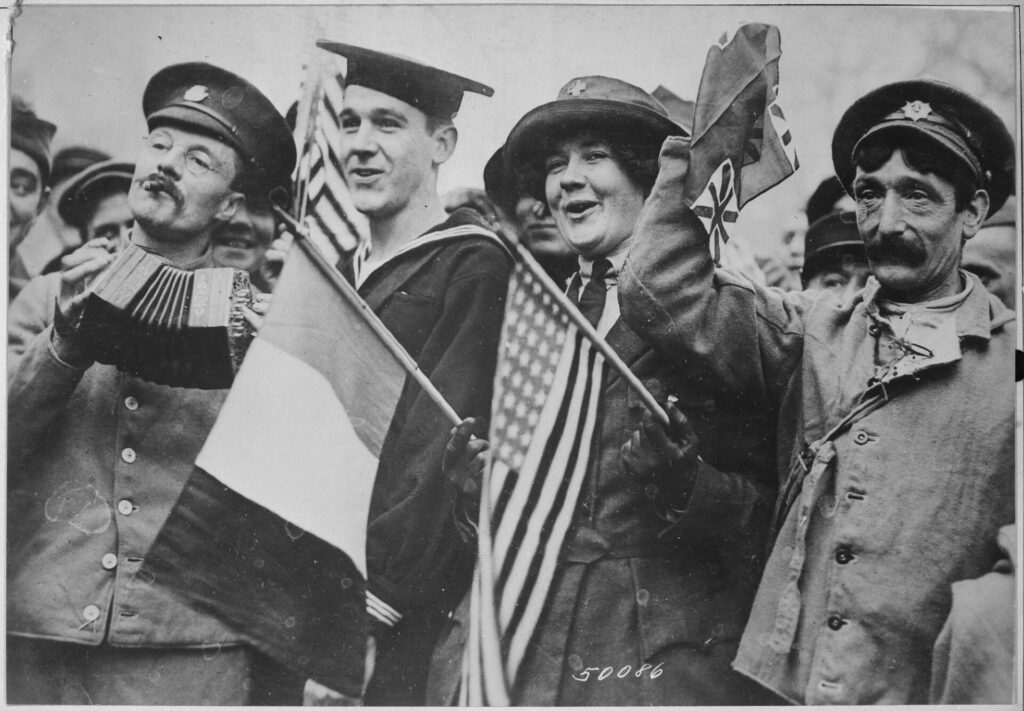
What Victory Cost the Winners
Britain
Britain entered the war as the world’s dominant imperial power — the centre of a global empire, the world’s leading financial power, the unchallenged ruler of the seas.
It emerged from the war having lost 886,000 soldiers dead, with hundreds of thousands more permanently disabled. An entire generation of young men from every corner of the country and the Empire had been consumed. The phrase “lost generation” was coined specifically about Britain after 1918 — the writers, scientists, politicians, and leaders who never came home.
The financial cost was staggering. Britain had borrowed enormous sums to fund the war — primarily from the United States. It would spend decades paying off that debt. The City of London’s dominance of global finance was transferred, almost completely, to New York. The British Empire was still vast in 1918, but it was a different kind of empire — one that had glimpsed its own limits.
France
France suffered most of all among the major Allied powers.
The war had been fought largely on French soil. The northern regions of France — some of the most agriculturally and industrially productive in the country — had been devastated. Entire villages had been obliterated so completely that they were never rebuilt. The Verdun battlefield, where nearly 700,000 men died in ten months of fighting in 1916, left a lunar landscape of shell craters and contaminated soil that cannot be safely farmed even today.
France lost approximately 1.4 million soldiers dead — a higher proportion of its male population than any other major Allied power. Entire age groups of French men had been wiped out. The demographic consequences lasted for decades.
France won the war. But France in 1918 was a country that had been bled almost dry, sitting on top of the ruins of its own territory, deeply traumatized, and absolutely determined never to allow Germany to do this again. That determination would shape French foreign policy for the next twenty years — and contribute directly to the conditions that made World War 2 possible.
Russia
Russia never got to experience winning at all.
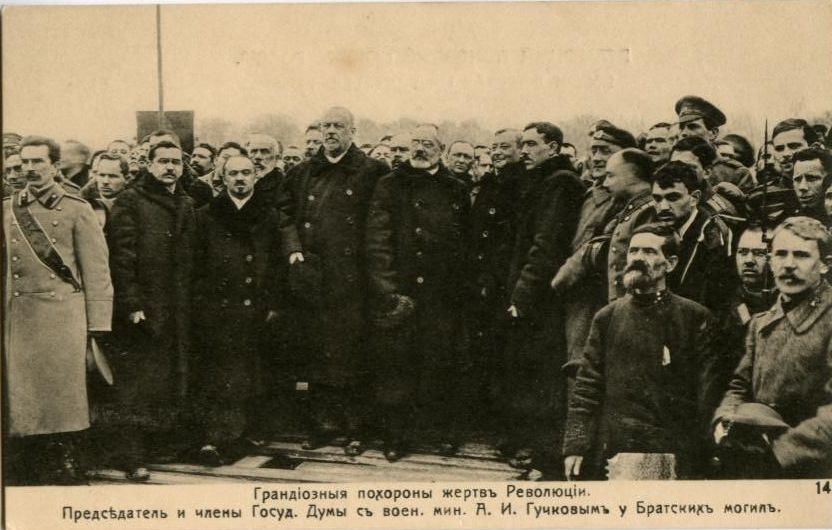
By 1917, the strain of the war had broken the Russian state. The Tsar was overthrown in February 1917. The provisional government that replaced him made the disastrous decision to keep fighting. The Bolsheviks, who promised to end the war, seized power in October 1917. In March 1918, Russia signed the Treaty of Brest-Litovsk with Germany — a humiliating peace that surrendered enormous territories in exchange for getting out of the war.
Russia was then plunged immediately into a brutal civil war that lasted until 1922. The country that emerged was the Soviet Union — a revolutionary communist state that the other Allied powers regarded with deep suspicion and hostility. Whatever Russia had hoped to gain from the war, it did not get it.
The United States
America came closest to genuine winning — because America came in latest, suffered least, and gained most.
The United States entered the war in April 1917, after three years of watching Europe destroy itself. American casualties — around 116,000 dead — were significant but incomparably smaller than those of Britain, France, or Germany. American industry had spent the war years supplying the Allies with weapons and materials, accumulating enormous wealth in the process.
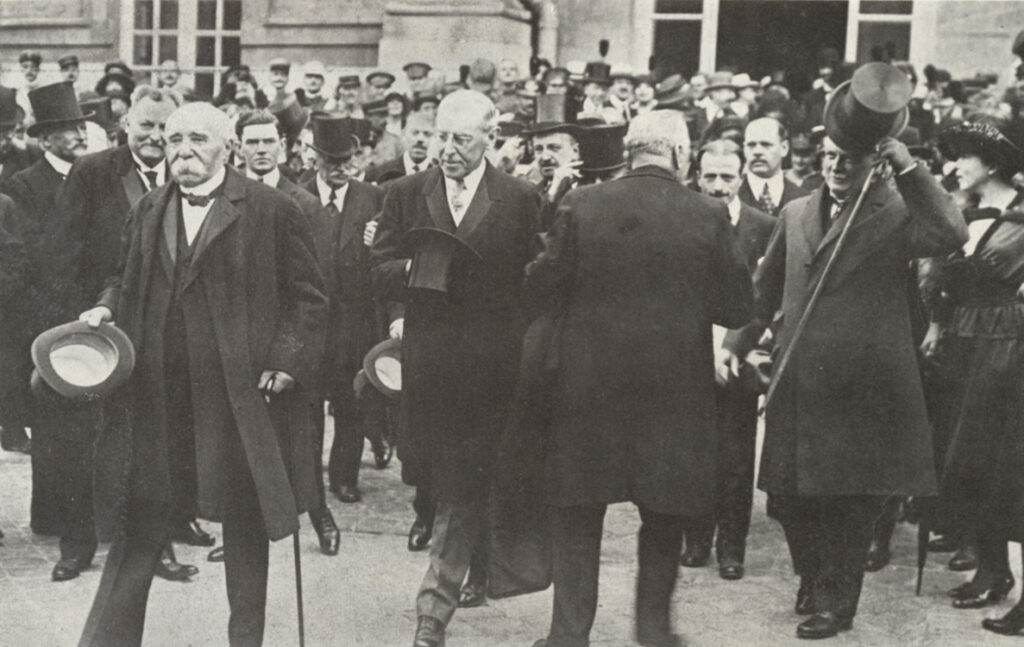
By 1918, the United States was unambiguously the world’s dominant economic power. President Woodrow Wilson arrived at the peace conference as the most powerful man in the room — representing a country that had not been exhausted, was not in debt, and had a clear vision for how the post-war world should be organized.
Whether Wilson’s vision was wise is another question entirely.
The Treaty of Versailles — Victory Turned Toxic
The peace settlement that officially ended World War 1 was negotiated in Paris in 1919, primarily by Britain, France, and the United States. Germany was not invited to participate. It was presented with the finished treaty and told to sign.
The Treaty of Versailles, signed on June 28, 1919 — exactly five years after the assassination of Franz Ferdinand — imposed enormous penalties on Germany. Germany lost territory to France, Poland, Denmark, and Belgium. It lost all of its overseas colonies. Its military was reduced to a token force of 100,000 men. It was forbidden to have an air force or submarines.
And then there was Article 231 — the War Guilt Clause.
This single paragraph declared that Germany and its allies were solely responsible for the war and all the damage it had caused. On the basis of this guilt, Germany was required to pay reparations — compensation to the Allied powers for the cost of the war. The final figure, set in 1921, was 132 billion gold marks. Germany did not finish paying this debt until 2010.
The German reaction to the treaty was one of shocked fury. Whatever responsibility Germany bore for starting the war — and historians continue to debate exactly how much that was — ordinary Germans experienced the treaty as a profound humiliation. The idea that Germany had been “stabbed in the back” by its own politicians, forced to accept defeat when the army was still in the field, took hold and spread.
A young Austrian corporal who had served in the German army throughout the war read the terms of the treaty and felt, in his own words, that he could not stop weeping. His name was Adolf Hitler. He would spend the next twenty years channeling German resentment of Versailles into a political movement that started World War 2.
The Empires That Vanished
One of the most dramatic consequences of World War 1 — and one that is often underappreciated — is the sheer number of empires it destroyed.
In 1914, four great empires dominated Europe and the Middle East — the German Empire, the Austro-Hungarian Empire, the Russian Empire, and the Ottoman Empire. By 1922, all four had ceased to exist.
The collapse of Austria-Hungary was particularly dramatic. The empire that had ruled Central Europe for centuries simply fell apart along ethnic lines in the autumn of 1918. In its place appeared a cluster of new nation states — Czechoslovakia, Yugoslavia, Hungary, and an enlarged Poland and Romania. These new countries were drawn up at the Paris Peace Conference by diplomats who had never visited most of them and who frequently ignored the ethnic and cultural realities on the ground.
The borders they drew were contested from the moment they were established. Many of those same borders, and the conflicts they created, are still with us today.
The collapse of the Ottoman Empire created even more lasting consequences. Britain and France divided up the Ottoman territories in the Middle East between themselves — drawing the borders of the modern states of Iraq, Syria, Lebanon, Jordan, and Palestine on maps in Paris, with similarly little regard for who actually lived there and what they wanted.
The consequences of those decisions are still being felt in the Middle East today.
So Who Really Won?
By any honest accounting, the answer to “who won World War 1” is deeply unsatisfying.
The Allied powers won the military conflict. But the human and economic cost of that victory was so enormous that it is hard to call it winning in any meaningful sense. Britain and France emerged from the war weaker, poorer, and more traumatized than they had entered it. Russia collapsed entirely. The United States, the one country that came close to genuine strategic benefit, retreated into isolationism afterwards — refusing to join the League of Nations that its own president had created, and withdrawing from European affairs until forced back by the Second World War.
The peace settlement — intended to make the world safe and stable — created so much resentment, so many territorial disputes, and so many fragile new states that it made the world less stable than it had been before 1914.
And the defeated powers were not truly pacified — they were humiliated. A humiliated great power with a hundred million people, an industrial economy, and a deep sense of injustice is not a defeated power. It is a powder keg.
Twenty-one years after the Armistice, Germany invaded Poland. The Second World War had begun.
What Winning Should Have Looked Like
It is worth asking — with the benefit of a century of hindsight — what a genuine victory in World War 1 might have looked like.
Many historians point to the settlement after the Napoleonic Wars in 1815 as a better model. After defeating Napoleon, the victorious powers brought France back into the international system as a respected participant rather than a humiliated outcast. The resulting settlement — the Concert of Europe — kept the great powers from fighting each other for nearly a century.
The Paris Peace Conference of 1919 tried to do something similar with Wilson’s Fourteen Points — a framework for a new international order based on self-determination, open diplomacy, and collective security. But Wilson’s idealism collided with French demands for punishment, British imperial interests, and American domestic politics. The result was neither a generous peace nor a truly crushing one — just humiliating enough to generate enormous resentment, just lenient enough to leave Germany capable of acting on it.
Nobody won World War 1 in the way that really matters — the way that makes the sacrifice worth something, that produces a stable peace, that ensures it will not have to be done again.
They just stopped. After 17 to 20 million deaths, they just stopped. And then, twenty-one years later, they started again.
Do you think the Allied powers could have built a lasting peace after 1918 — or was World War 2 inevitable? Leave your thoughts in the comments. And if you want to understand how the peace unravelled, the story of the Treaty of Versailles goes much deeper into the decisions that shaped the rest of the century.
2 responses to “Who Won World War 1 — And What Did Winning Mean?”
-
[…] summer 1918, the Spring Offensive had burned itself out. Germany had gained territory but not victory. And it had used its best soldiers to do […]
-
[…] nations sent delegations. But real power rested with three men, known as the Big […]
Leave a Reply