The Treaty of Versailles Explained — The Peace That Created the Next War
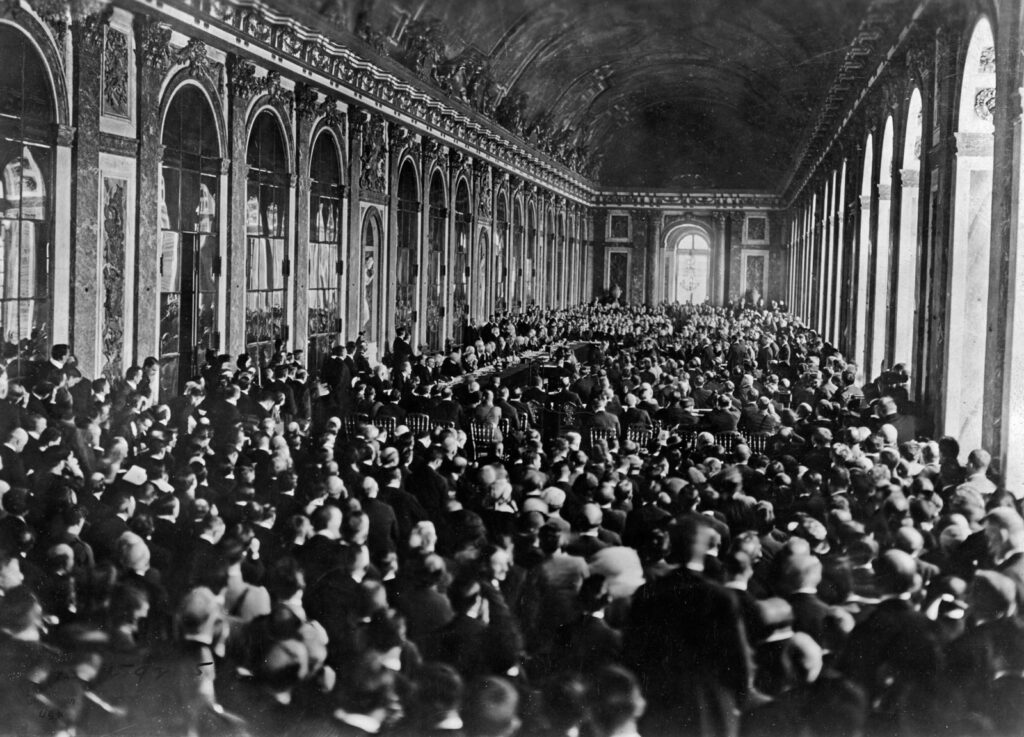
In June 1919, the most powerful men in the world gathered in the most extravagant building in the world to sign a document that was supposed to end war forever.
The Hall of Mirrors at the Palace of Versailles — 73 metres long, lined with 357 mirrors, built by Louis XIV to demonstrate the absolute power of the French monarchy — had been chosen deliberately. It was in this same room, in January 1871, that the German Empire had been proclaimed after France’s humiliating defeat in the Franco-Prussian War. Now, 48 years later, France was taking its revenge in the most theatrical way possible.
The German delegates were not invited to negotiate. They were escorted in, handed a document, and told to sign.
What they signed on June 28, 1919 — exactly five years to the day after the assassination of Franz Ferdinand — was the Treaty of Versailles. It formally ended World War 1. It redrew the map of the world. It created new countries and destroyed old empires. It imposed crushing penalties on Germany. And it planted, in the soil of European politics, the seeds of a resentment so deep and so bitter that it would produce Adolf Hitler, the Second World War, and the deaths of another 70 to 85 million people.
Understanding the Treaty of Versailles means understanding not just how World War 1 ended, but why the 20th century unfolded the way it did.
Treaty of Versailles Explained in Simple Terms
The Treaty of Versailles was the peace agreement that officially ended World War 1 in 1919. It forced Germany to accept responsibility for the war, pay large reparations, lose territory, and reduce its military power.
While it succeeded in ending the war, many of its terms created resentment and instability that contributed to the outbreak of World War 2.
The Paris Peace Conference — Who Was in the Room
The peace settlement was negotiated at the Paris Peace Conference, which opened on January 18, 1919 — just over two months after the armistice had stopped the fighting.
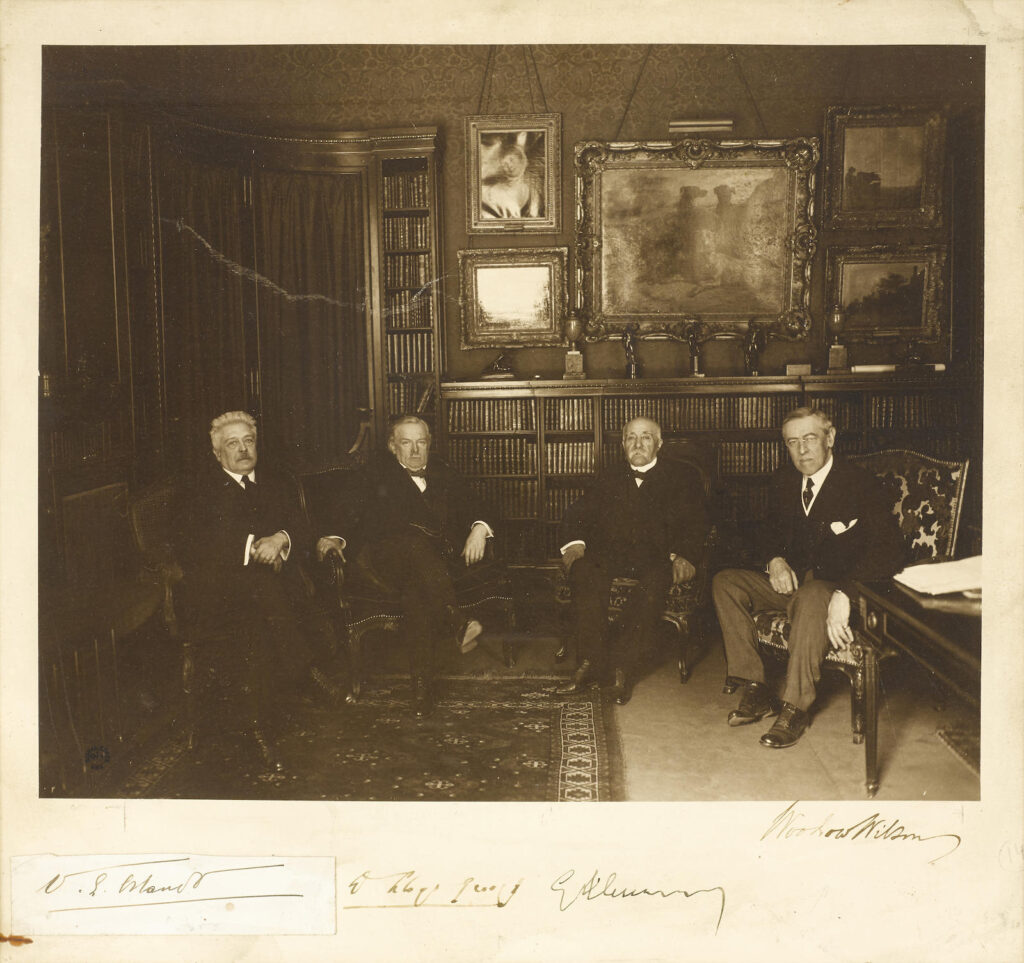
Thirty-two nations sent delegations. But real power rested with three men, known as the Big Three.
Georges Clemenceau represented France. He was 77 years old, had lived through the Franco-Prussian War of 1870, had served as Prime Minister twice, and had personally witnessed Germany invade and devastate French soil for four years. He wanted Germany punished. He wanted it weakened so severely that it could never threaten France again. He had no interest in being generous to a country that had killed 1.4 million French soldiers and reduced large parts of northern France to rubble. “This is not a peace,” he later said of the final treaty. “It is an armistice for twenty years.” He was exactly right.
David Lloyd George represented Britain. He was in a more complicated position than Clemenceau. The British public — and the politicians who depended on them — wanted Germany punished harshly. Slogans like “Squeeze Germany until the pips squeak” had won elections. But Lloyd George privately worried that a peace that was too harsh would be unstable — that humiliating Germany completely would eventually produce a dangerous backlash. He wanted a firm peace, but not a suicidal one. He was largely overruled.
Woodrow Wilson represented the United States. He arrived in Paris as the most idealistic of the three — and arguably the most powerful, leading the only major nation that had not been exhausted and bankrupted by the war. Wilson had already published his Fourteen Points — a framework for a new international order based on self-determination, open diplomacy, freedom of the seas, arms reduction, and a new international body called the League of Nations that would resolve future disputes peacefully.
Wilson’s vision was genuinely radical. He believed the old system of secret alliances, imperial competition, and nationalist rivalry had caused the war — and that a new system, based on law and collective security, could prevent the next one. His Fourteen Points had been enormously popular across Europe when he published them in January 1918. People had believed in them.
The gap between Wilson’s promises and what the treaty actually delivered would prove to be one of the most consequential failures of the entire 20th century.
What the Treaty Actually Said
The Treaty of Versailles was 440 articles long. Its terms covered everything from the fate of German colonies in Africa to the navigation rights on the Rhine River. But five elements defined it — and defined its consequences.
1. The War Guilt Clause — Article 231
This was the most consequential and most hated single paragraph in the entire treaty.
Article 231 stated, in plain language, that Germany and its allies accepted sole responsibility for causing the war and all the loss and damage that had resulted from it. This was the legal foundation for everything else — because if Germany was solely responsible, Germany could be made to pay for everything.
The problem was that it was not true — or at least, not the whole truth. Responsibility for the war was shared, to varying degrees, across multiple powers. Austria-Hungary had issued the ultimatum that started the shooting war. Russia had mobilized first. Germany had given Austria-Hungary the blank check that made escalation possible. Britain and France had their own roles. The war was a collective failure of an entire system — not the crime of a single nation.
German politicians, diplomats, and ordinary citizens knew this. The War Guilt Clause was experienced not as a legal technicality but as a profound and unjust humiliation — a lie written into international law and forced on a defeated nation at gunpoint. Its political consequences would echo for two decades.
2. Reparations — Germany Must Pay
On the basis of Article 231, Germany was required to pay reparations — financial compensation for the damage caused by the war.
The final figure was set in 1921, after lengthy negotiation: 132 billion gold marks. To put this in perspective, Germany’s entire annual economic output before the war had been around 50 billion marks. The reparations bill was roughly equivalent to more than two years of the entire German economy.
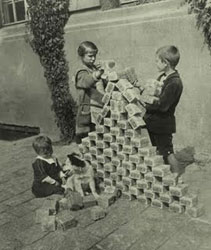
Germany made its first payment in 1921. The economic strain was immediate and severe. Unable to generate sufficient export income to meet the payments, Germany began printing money — triggering the catastrophic hyperinflation of 1923, during which the value of the German mark collapsed so completely that people needed wheelbarrows full of banknotes to buy a loaf of bread. A postage stamp cost 50 billion marks. Workers were paid twice a day because by the afternoon, the morning’s wages had already lost half their value.
The hyperinflation wiped out the savings of Germany’s middle class entirely. People who had spent decades building security for themselves and their families found it gone overnight. The psychological and political consequences of this experience — the sense that the system had failed, that the old certainties could not be trusted — would prove fertile ground for extremist politics.
Germany’s reparations payments were restructured several times, suspended during the Great Depression, and eventually cancelled entirely in 1932. But the damage had been done. Germany made a final payment on the remaining debt in 2010 — 92 years after the war ended.
3. Territorial Losses — Germany Is Shrunk
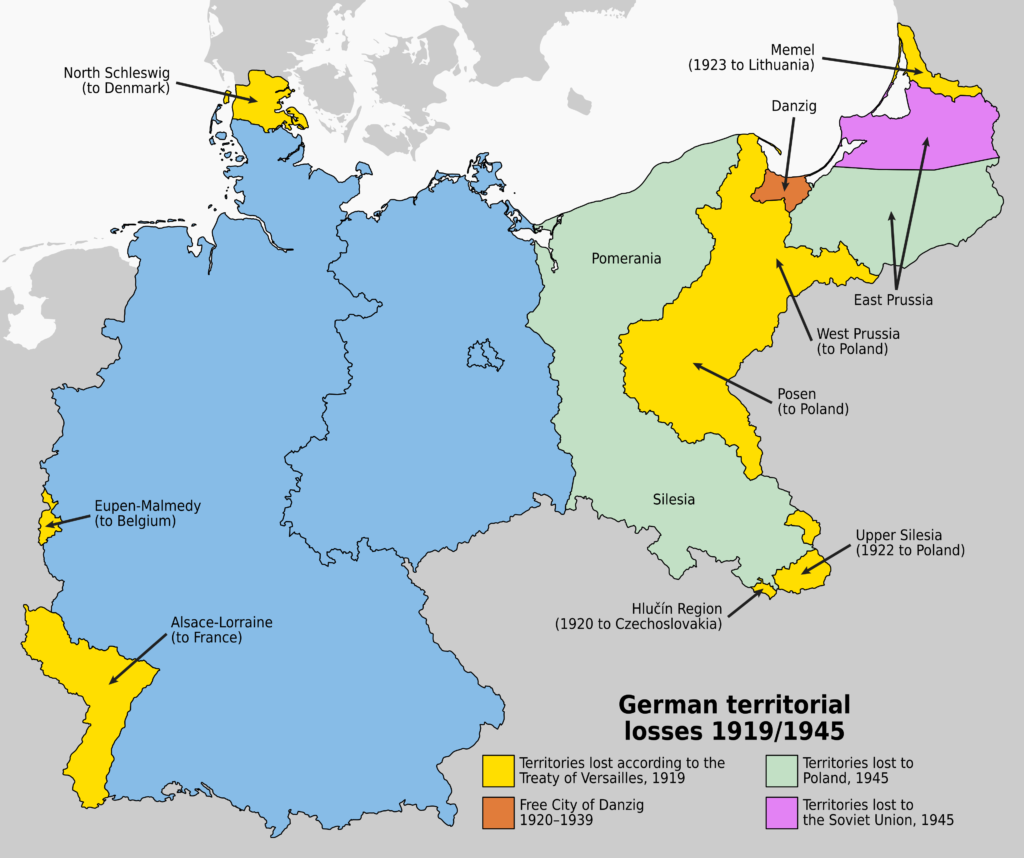
The treaty stripped Germany of approximately 13 percent of its pre-war territory and 10 percent of its population.
In the west, Alsace-Lorraine — the region Germany had taken from France in the Franco-Prussian War of 1871 — was returned to France. The Rhineland, the industrial heartland of western Germany, was demilitarized and placed under Allied occupation.
In the east, Germany lost even more. A new state of Poland — which had not existed as an independent country since 1795 — was created from territories taken from Germany, Russia, and Austria-Hungary. To give Poland access to the sea, a strip of German territory called the Polish Corridor was carved out — separating the main body of Germany from the eastern province of East Prussia. The port city of Danzig, overwhelmingly German in population, was declared a Free City under League of Nations supervision rather than part of either Germany or Poland.
The German-speaking populations of these lost territories did not get to vote on whether they wanted to be part of Germany or not. The principle of self-determination that Wilson had made central to his Fourteen Points was applied selectively — to some peoples but not others, and in particular not to Germans.
Austria, the German-speaking rump of the former Austro-Hungarian Empire, wanted to unite with Germany — a logical application of the self-determination principle. This was explicitly forbidden by the treaty.
Germany’s overseas colonies were distributed among the Allied powers — primarily Britain, France, Australia, and South Africa — under the euphemistic label of “League of Nations mandates.”
4. Military Restrictions — Germany Is Disarmed
The German military was reduced to a shadow of its wartime strength.
The army was limited to 100,000 men — enough to maintain internal order but far too small to threaten its neighbours. Conscription was abolished. The general staff — the professional military planning organization that had run Germany’s war — was dissolved. Germany was forbidden from having tanks, military aircraft, or submarines. The navy was reduced to a handful of small surface vessels.
The immediate military effect was significant. The long-term political effect was even more significant. Military service had been a central part of German national identity for generations. The forced disarmament was experienced as an emasculation — a deliberate humiliation designed to keep Germany permanently weak.
When Hitler came to power in 1933, one of his first and most popular acts was to reintroduce conscription and begin rebuilding the German military. The crowds who cheered him were not just cheering rearmament. They were cheering the reversal of humiliation.
5. The League of Nations — Wilson’s Dream
The one element of the treaty that reflected Wilson’s vision rather than Clemenceau’s revenge was the creation of the League of Nations — an international body that would resolve disputes between nations through negotiation rather than war.
The League was genuinely innovative. It had mechanisms for collective security, for economic sanctions against aggressor states, for arbitration of disputes. In principle, it was the most significant attempt in human history to replace the law of the jungle in international relations with something better.
It had one fatal flaw.
The United States did not join.
Wilson returned home to find that the US Senate — controlled by his political opponents — refused to ratify the treaty. America, the country whose president had designed the League, whose idealism had inspired it, whose power could have made it effective — retreated into isolationism and left the League to operate without it.
Without American participation, the League was dominated by Britain and France — two exhausted, overstretched empires that could barely manage their own affairs. It had no army of its own. It could not compel compliance from determined aggressors. When Japan invaded Manchuria in 1931 and Italy invaded Ethiopia in 1935, the League condemned them and did nothing else. When Hitler began dismantling the treaty in the 1930s, the League watched.
The League of Nations was dissolved in 1946, replaced by the United Nations. But the damage had been done in the 1920s, when the institution that was supposed to keep the peace proved incapable of doing so.
The German Reaction — Shock, Humiliation, and Fury
When the terms of the treaty were published in May 1919, the German reaction was one of genuine shock.
The German government and public had expected a harsh peace. But they had also expected — or hoped — that Wilson’s Fourteen Points would form the basis of the settlement. Germany had, after all, agreed to the armistice partly on the understanding that the peace would be based on Wilson’s principles. The gap between those principles and the actual treaty terms felt like a betrayal.
The German delegation leader, Count Brockdorff-Rantzau, refused to stand when he addressed the conference — a deliberate breach of protocol that caused outrage among the Allied delegates. He argued that the treaty violated the principles that had been promised, that the War Guilt Clause was false, and that the reparations were unpayable. He was ignored.
The German government briefly considered refusing to sign. The military advised that resuming the war was impossible — Germany was simply too exhausted and the Allied blockade, still in place, was still causing civilian deaths. The government signed, under protest, describing the treaty as a “dictated peace” — a Diktat.
The word Diktat entered the German political vocabulary and stayed there. It became shorthand for everything that was wrong with the post-war world — the injustice, the humiliation, the sense that Germany had been punished for a guilt it had not earned alone.
John Maynard Keynes — The Man Who Predicted Everything
One of the most remarkable aspects of the Treaty of Versailles is how quickly its critics were proven right.
The British economist John Maynard Keynes had attended the Paris Peace Conference as an adviser to the British Treasury. He resigned before the treaty was signed, returned to England, and within months published a book called “The Economic Consequences of the Peace” — one of the most prescient and devastating works of political analysis of the 20th century.
Keynes argued that the reparations were economically impossible — that Germany could not generate the export surplus necessary to pay them without becoming so economically dominant in European markets that it would undermine the very countries it was paying. He argued that the territorial changes would create political instability across Central Europe. He argued that the treaty, rather than securing peace, was laying the foundations for economic collapse and eventual conflict.
He was right about almost everything. Within three years, the German economy was in crisis. Within four years, hyperinflation had destroyed the middle class. Within fourteen years, Adolf Hitler was Chancellor of Germany.
Keynes himself later became one of the most influential economists in history — his theories on government spending and economic management shaped the post-World War 2 settlement that, by deliberate contrast with Versailles, actually worked.
Was the Treaty of Versailles Too Harsh — Or Not Harsh Enough?
This is one of the great debates of modern history and honest historians will tell you there is no clean answer.
The case that the treaty was too harsh is straightforward. The reparations were economically destabilizing. The War Guilt Clause was politically toxic. The territorial changes created grievances that were exploited by demagogues. The overall effect was to humiliate Germany without actually breaking its capacity to eventually challenge the settlement — producing the worst possible outcome, a resentful and eventually revanchist great power.
The case that the treaty was not harsh enough is less commonly made but historically interesting. Germany in 1919 was defeated but not destroyed. Its industrial capacity was largely intact. Its territory — apart from the border regions — had not been occupied or devastated. Unlike France, which had fought the war largely on its own soil, Germany’s homeland had been untouched by the fighting. A truly crushing peace — one that dismantled German industrial capacity, permanently occupied the Rhineland, and ensured Germany could not rebuild — might have prevented World War 2. Instead, the treaty was harsh enough to generate enormous resentment but not thorough enough to make acting on that resentment impossible.
The most thoughtful answer may be this — the treaty was less the problem than the failure to enforce and adapt it. When Germany defaulted on reparations, the Allies could not agree on a response. When Hitler began violating the military terms in the 1930s, Britain and France chose appeasement rather than enforcement. A more consistent, more united Allied response to German revisionism in the 1930s might have prevented the war even with the flawed treaty of 1919.
The treaty created the conditions for catastrophe. The political failures of the 1930s turned those conditions into reality.
The Treaty of Versailles and the World Today
The consequences of the Treaty of Versailles did not end with World War 2.
The borders drawn at Paris in 1919 — of Poland, Czechoslovakia, Yugoslavia, Iraq, Syria, Jordan, Lebanon, and Palestine — created ethnic and political tensions that have never been fully resolved. The Middle East borders in particular, drawn by British and French diplomats who knew little about the region and cared primarily about their own imperial interests, created the conditions for conflicts that continue today.
The failure of the League of Nations led directly to the creation of the United Nations — an institution specifically designed to correct the flaws that had made the League ineffective. The Marshall Plan, through which the United States poured billions of dollars into rebuilding Western Europe after World War 2, was explicitly designed as the opposite of Versailles — generosity rather than punishment, reconstruction rather than retribution.
It worked. Western Europe has not fought a major war since 1945. The lesson of Versailles — that a punitive peace is an unstable peace — had finally been learned. It just took another world war and another 70 to 85 million deaths to learn it.
The Hall of Mirrors — Then and Now
The Hall of Mirrors at Versailles is open to tourists today. You can walk through it on any day the palace is open — past the 357 mirrors, under the painted ceiling, through the same room where the German Empire was proclaimed in 1871 and where the treaty that destroyed it was signed in 1919.
It is a beautiful room. It was built to celebrate power and permanence — the absolute authority of the Sun King, the eternal glory of France.
History, of course, had other ideas.
The empires that built Versailles and signed the treaty within it are gone. The men who signed it are long dead. The war it was supposed to end was followed within a generation by a worse one. And yet the Hall of Mirrors stands — still beautiful, still reflecting those 357 versions of whoever happens to be standing in it.
Perhaps that is the most honest monument to the Treaty of Versailles. A room full of reflections, each one showing you what you want to see, none of them showing you the whole truth.
So to sum it up: Why Did the Treaty of Versailles Lead to World War 2?
The Treaty of Versailles did not directly cause World War 2, but it created the conditions that made another war far more likely.
The combination of economic hardship, political instability, and national humiliation weakened Germany’s democracy and increased support for extremist movements. Adolf Hitler and the Nazi Party used anger toward the treaty as a central part of their message, promising to reverse its terms and restore German power.
At the same time, the treaty failed to create a strong system to enforce peace. The League of Nations lacked the authority and support needed to stop aggressive actions in the 1930s.
In this sense, the treaty did not make war inevitable — but it made peace fragile.
Do you think the Treaty of Versailles made World War 2 inevitable — or could different political decisions in the 1930s have prevented it? Leave your thoughts in the comments. And if you want to understand how the resentment the treaty created turned into the rise of Hitler and the Second World War, the full story of how WWI caused WWII is the natural next read.
Leave a Reply