How Did World War 1 End? The Armistice Explained (1918)
At exactly 11 o’clock on the morning of November 11, 1918, the guns stopped.
After four years, three months, and fourteen days of continuous warfare — after the deaths of somewhere between 17 and 20 million people — the Western Front fell silent. Soldiers on both sides climbed out of their trenches, sat on the ground, and simply stared at each other across No Man’s Land. Many of them later said they did not know what to do. The silence, after so long, felt wrong. Felt impossible.
One British soldier wrote in his diary that the quiet was “the strangest sound I have ever heard.”
But how did World War 1 end? The short answer is the Armistice of November 11, 1918 — the agreement that stopped the fighting. The longer answer involves a collapsing German Empire, revolution in the streets of Berlin, a negotiation conducted in a railway carriage in a French forest, and a final, tragic morning of unnecessary deaths before the ceasefire took effect.
The even longer answer involves the Treaty of Versailles, the redrawing of the entire world map, and a peace settlement so flawed that it made the next world war almost inevitable.
This is the full story.
The War That Would Not End — 1917 and 1918
To understand how World War 1 ended, you first need to understand how close it came to not ending at all — at least not in the way it did.
By the end of 1917, the war had reached a genuinely desperate point for both sides. The battles of 1916 — the Somme and Verdun — had consumed hundreds of thousands of men on each side without producing a decisive result. The French Army had mutinied following the catastrophic Nivelle Offensive in the spring of 1917. Large sections of the French line were effectively refusing to make further offensive attacks. The British were fighting alone at Passchendaele in conditions so terrible that they became a symbol of the war’s worst futility.
On the Eastern Front, Russia had collapsed. The revolution of October 1917 brought the Bolsheviks to power, and they were determined to get out of the war at any cost. In March 1918, Russia signed the humiliating Treaty of Brest-Litovsk with Germany — surrendering enormous territories and formally exiting the conflict.
This changed everything. Suddenly, Germany could transfer dozens of divisions from the Eastern Front to the West. For the first time since 1914, Germany had numerical superiority on the Western Front.
At the same time, the United States had entered the war in April 1917. Fresh American troops were beginning to arrive in France — eventually over two million of them. It was a race. Could Germany win in the West before America’s weight tipped the balance decisively?
The German Spring Offensive — Germany’s Last Gamble
In March 1918, Germany launched what it hoped would be the decisive blow — a massive offensive on the Western Front that became known as the Spring Offensive, or Operation Michael.
It was the most dramatic military event of the entire war.
Using new “stormtrooper” tactics developed over the previous years — small, fast-moving groups of elite infantry who bypassed strong points and drove deep into enemy lines rather than grinding forward metre by metre — the German Army broke through the Allied lines in a way that had not happened since 1914. In a single day, German forces advanced further than had been achieved in months of fighting during the Somme.
The Allied lines bent dangerously. For a brief period, it seemed possible that Germany might actually win. The road to Paris was partially open. The French government considered evacuating the capital.
But the offensive ultimately failed — for reasons that reveal exactly why Germany lost the war.
Germany had broken through but could not exploit it. The stormtrooper units that led the assault were the best soldiers Germany had — and they had been used up. The troops following behind them were older, less fit, and less motivated. Supply lines could not keep up with the advance. And crucially, the German soldiers who broke through Allied lines discovered something that shocked them — Allied supply dumps full of food, medicine, and equipment that the blockaded German Army had not seen in years. In some cases, German soldiers simply stopped advancing and began eating and drinking whatever they could find.
By summer 1918, the Spring Offensive had burned itself out. Germany had gained territory but not victory. And it had used its best soldiers to do it.
The Hundred Days — The War Turns
On August 8, 1918, the Allied armies launched what became known as the Hundred Days Offensive — the sequence of attacks that finally broke the German Army and ended the war.
The date — August 8 — was later described by German General Erich Ludendorff as “the black day of the German Army.” On that morning, using massed tanks, aircraft, artillery, and infantry in coordination for the first time — the fully developed version of the combined arms tactics that would dominate 20th century warfare — the Allies broke through the German lines near Amiens.
The German Army did not just retreat. In many sectors it simply dissolved. Entire units surrendered without fighting. German soldiers who were retreating encountered fresh units moving toward the front and shouted at them — “you are prolonging the war.” Officers trying to rally their men were called strikebreakers and traitors.
This was a broken army. The question was no longer whether Germany would lose, but how quickly, and on what terms.
Through August, September, and October 1918, the Allied advance continued. Germany’s allies collapsed one by one. Bulgaria signed an armistice in September. The Ottoman Empire followed in October. Austria-Hungary, collapsing from within as its various ethnic groups declared independence, signed an armistice on November 3.
Germany was now fighting alone. And Germany was falling apart.
Revolution in Germany — The War Ends from Within
The story of how World War 1 ended is not just a story of military defeat. It is also a story of revolution.
By October 1918, Germany was in crisis not just at the front but at home. Four years of war and the Allied naval blockade had created genuine hardship for ordinary German civilians. Food was desperately short. The influenza pandemic — the Spanish flu — was killing thousands of people who were already weakened by malnutrition. War weariness had turned into something deeper — a loss of faith in the war itself, in the government that was running it, and in the Kaiser who stood above it all.
On October 29, German sailors at the port of Kiel were ordered to put to sea for a final, desperate naval engagement with the British fleet. They refused. The naval mutiny spread rapidly to other ports — and then, extraordinarily quickly, to the cities. Workers’ and soldiers’ councils — directly modelled on the Russian soviets of 1917 — began taking control of German cities. By November 8, revolution had reached Munich. By November 9, it had reached Berlin.
Kaiser Wilhelm II, the man who had ruled Germany since 1888 and whose personal decisions had played a significant role in starting the war, abdicated on November 9, 1918. He crossed the border into the Netherlands, where he lived in comfortable exile until his death in 1941. He never returned to Germany.
A new German government — a republic, proclaimed from a window of the Reichstag building on November 9 by a social democratic politician who had only just been told he was now in charge — immediately sought an armistice.
The Railway Carriage in the Forest
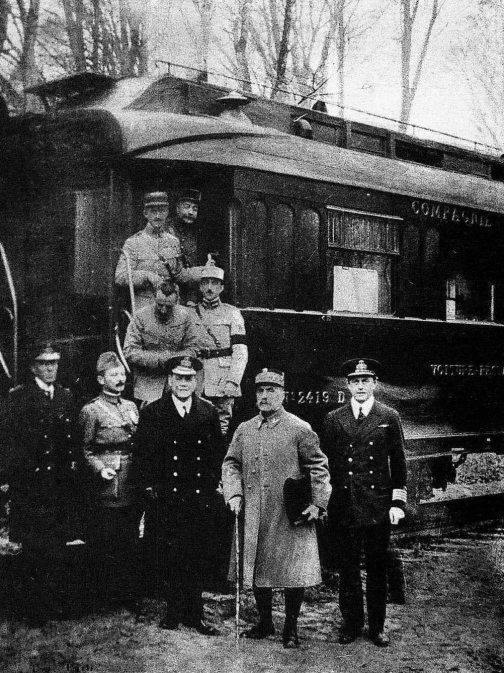
The armistice negotiations took place in a location that was deliberately kept secret — a railway carriage in the Forest of Compiègne, about 80 kilometres northeast of Paris.
The German delegation, led by a civilian politician named Matthias Erzberger, arrived at the forest on November 8. They were met by Allied Supreme Commander Marshal Ferdinand Foch — who made it immediately clear that he was not there to negotiate. He was there to dictate terms.
The terms were severe. Germany was required to evacuate all occupied territories within 14 days. German forces were to withdraw east of the Rhine immediately. The Allied naval blockade — which had been slowly starving the German civilian population — would continue until a final peace treaty was signed. Germany was to surrender enormous quantities of military equipment — 5,000 locomotives, 150,000 railway wagons, 5,000 artillery pieces, 25,000 machine guns, and its entire submarine fleet.
Erzberger protested that the terms were so harsh that they would cause the deaths of thousands of German civilians from starvation and disease. He was told this was not a matter for discussion.
The armistice was signed at 5:10 in the morning on November 11, 1918. It was set to take effect at 11:00 that same morning — giving both sides six hours’ notice.
The Last Six Hours — The Tragedy Nobody Talks About
What happened in those final six hours before the armistice took effect is one of the most troubling and least discussed aspects of how World War 1 ended.
Both sides knew the war was ending. The armistice had been signed. The time was set. And yet, along the entire length of the Western Front, the fighting continued at its normal intensity right up until 11:00 — and in some sectors, intensified.
Military commanders ordered attacks that they knew would end within hours. Artillery units fired off their remaining shells — some because they had been ordered to, some because they did not want to have to transport unused ammunition back, some apparently out of habit or a desire to have fired their guns until the very last moment.
The statistics are staggering and deeply uncomfortable. On November 11, 1918 — the last day of the war — the Allied forces suffered approximately 11,000 casualties. Killed, wounded, and missing. On a day when everyone knew the war was ending at 11 o’clock.
For comparison, the Allied forces suffered around 8,500 casualties on D-Day in June 1944 — the largest seaborne invasion in history.
Private George Edwin Ellison of the British Army was killed at 9:30 on the morning of November 11 — one of the last British soldiers to die before the armistice. He was 40 years old, a veteran who had been one of the first British soldiers to arrive in France in 1914. He had survived the entire war. He died 90 minutes before it ended.
American soldier Private Henry Gunther was killed at 10:59 — one minute before the ceasefire. He had been demoted after writing a letter home complaining about the war and was reportedly trying to redeem himself. German soldiers who killed him knew the war was about to end and tried to wave him back. He kept coming. He was shot at 10:59 and died instantly.
The ceasefire came into effect at 11:00. The guns stopped. The silence fell.
What Happened at 11 O’Clock
The silence that fell at 11:00 on November 11 was unlike anything soldiers had experienced in four years.
At the front, men simply stopped. Some cheered. Some wept. Some did nothing at all — just sat and stared. A Canadian soldier wrote that he and the men around him stood in silence for several minutes before anyone spoke. When someone finally did speak, it was to say something completely ordinary — something about food, or about needing to find dry socks. The mundane reasserting itself over the enormous.
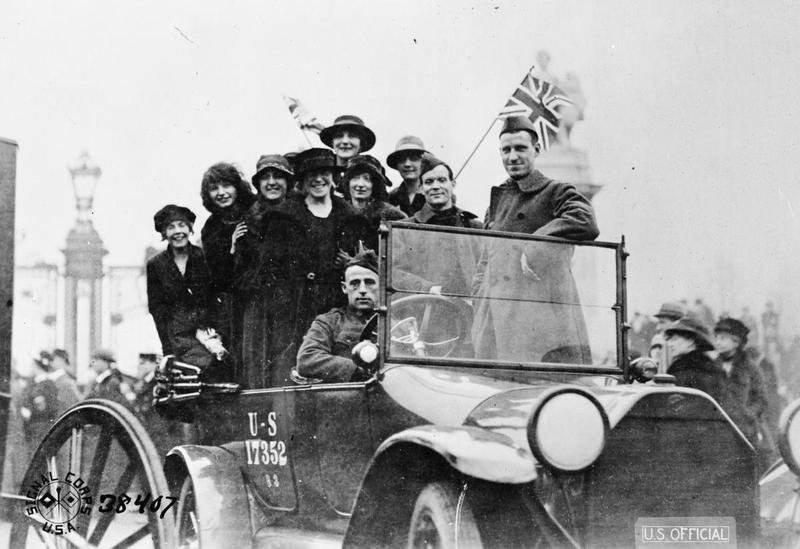
In Paris and London, the scenes were entirely different. Church bells rang — they had been silent since the start of the war, reserved as a warning signal for invasion. Crowds poured into the streets. Strangers embraced. People who had lived in four years of fear and grief and loss suddenly found themselves in the street, laughing and weeping simultaneously, unsure what to feel because they had been feeling fear for so long that the absence of it was almost physical.
In Berlin, there were no celebrations. There was shock, bewilderment, and for many people, a sense that something had gone terribly wrong — not that the war had been lost, but that it had been ended by revolution, by politicians, by what they would come to call a stab in the back. The seeds of what would become Nazism were already germinating in that confusion and resentment.
The Peace That Followed — And Why It Failed
The armistice of November 11 ended the fighting. It did not end the war.
The formal peace treaty — the Treaty of Versailles — was not signed until June 28, 1919, exactly five years after the assassination of Franz Ferdinand. Negotiated over six months at the Paris Peace Conference, it imposed severe terms on Germany — territorial losses, military restrictions, and the infamous War Guilt Clause that made Germany solely responsible for the war and required it to pay reparations.
The human consequences of how World War 1 ended extended far beyond November 1918. The Allied naval blockade continued until July 1919, after the treaty was signed. German civilians continued to starve after the armistice — the exact situation Erzberger had warned about in the railway carriage. Estimates of the number of German civilians who died from malnutrition and disease caused by the blockade during and after the war range from 400,000 to 700,000.
The influenza pandemic, which had been partly spread by the movement of troops, went on to kill somewhere between 50 and 100 million people worldwide — far more than the war itself.
The borders drawn at the Paris Peace Conference created new nations out of the ruins of old empires — Czechoslovakia, Yugoslavia, Poland, Hungary — drawing lines through ethnic and cultural communities with little regard for who actually lived where. Many of those borders immediately created conflicts that would last for generations.
And the humiliation imposed on Germany created the political conditions in which Adolf Hitler could rise to power, promising to restore German greatness and tear up the treaty that had humiliated the nation.
On September 1, 1939 — twenty-one years after the armistice — German forces invaded Poland. The Second World War had begun.
The war that was supposed to end all wars had ended. It just had not ended well enough.
Why November 11 Still Matters
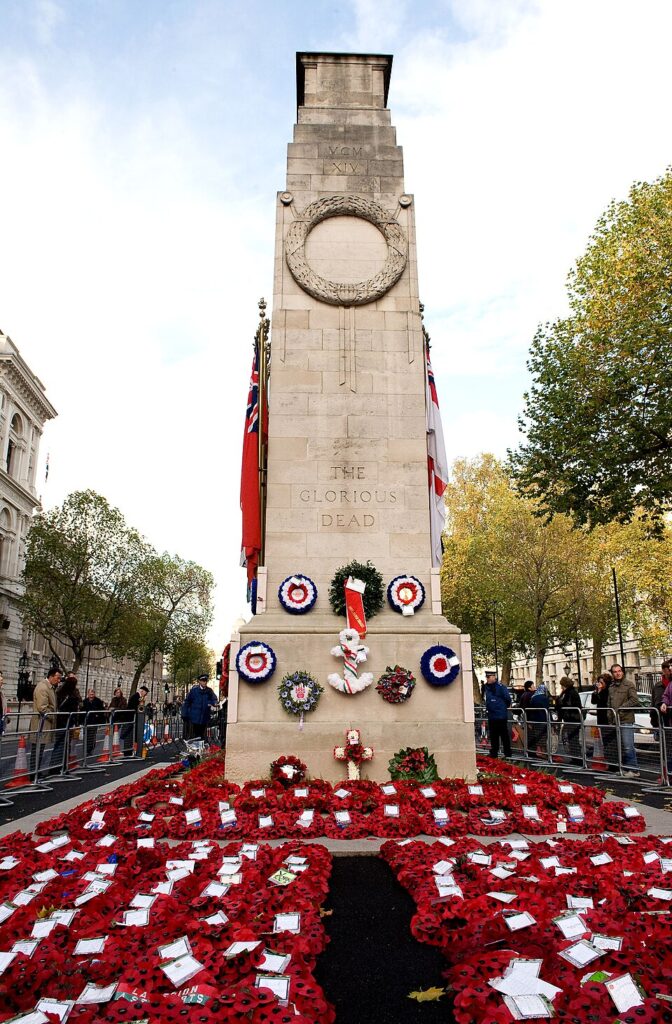
Every year on November 11, at 11 o’clock in the morning, the United Kingdom observes two minutes of silence. Traffic stops. People on busy city streets stand still. The silence lasts exactly two minutes — one for each minute that the original guns had been silent when the armistice took effect.
It is the most powerful public ritual in British life precisely because it does not explain or justify or celebrate. It simply stops. It asks everyone to be still for a moment and remember that the stopping of the guns, on that morning in 1918, was the thing that mattered most to the people who were there.
They had survived. Many of them wished others had.
How did World War 1 end? It ended with a signature in a railway carriage at 5:10 in the morning, and a silence that fell at 11:00, and a peace settlement that failed, and a second war twenty-one years later that killed even more people.
And every November 11, we stop for two minutes and try to hold all of that in our minds at once.
Did anything in this article surprise you — particularly about what happened in the final hours before the ceasefire? Leave your thoughts in the comments. And if you want to understand why the peace failed so completely, the full story of the Treaty of Versailles explains the decisions that shaped everything that came after.

3 responses to “How Did World War 1 End? The Armistice Explained (1918)”
-
[…] at the Paris Peace Conference, which opened on January 18, 1919 — just over two months after the armistice had stopped the […]
-
[…] comments. And if you want to understand what American entry actually achieved, the full story of how World War 1 ended explains what happened in the final months of the […]
-
[…] 11, 1918 — Armistice signed at 5:10 AM. Fighting stops at 11:00 AM. Official end of WWI […]
Leave a Reply