Why Did the US Enter World War 1? The Real Reasons Explained
For nearly three years, the United States watched the worst war in human history from a safe distance.
While Europe tore itself apart — while the Somme consumed 57,000 British soldiers in a single day, while Verdun ground on for ten months and 700,000 casualties, while poison gas drifted across the trenches of the Western Front — America stayed out. President Woodrow Wilson was re-elected in 1916 on the slogan “He kept us out of war.” Americans by large majority wanted nothing to do with what they saw as a European problem, a European failure, a European catastrophe.
And then, on April 6, 1917, the United States declared war on Germany.
Why? What changed? Why did the US enter World War 1 after three years of determined neutrality — and why in April 1917 specifically, rather than earlier or later?
The answer most people learn in school involves a sunken ship and a telegram. The real answer involves all of that — and also money, ideology, submarine warfare, domestic politics, and a president who had convinced himself he could save the world.
Let us go through it properly.
Main Reasons the US Entered World War 1
- Unrestricted submarine warfare: German U-boats attacked ships without warning, including American vessels.
- The Zimmermann Telegram: Germany’s proposal to Mexico threatened US national security.
- Economic interests: American banks and businesses were heavily tied to Allied success.
- Wilson’s ideology: A belief that the US could shape a better global order.
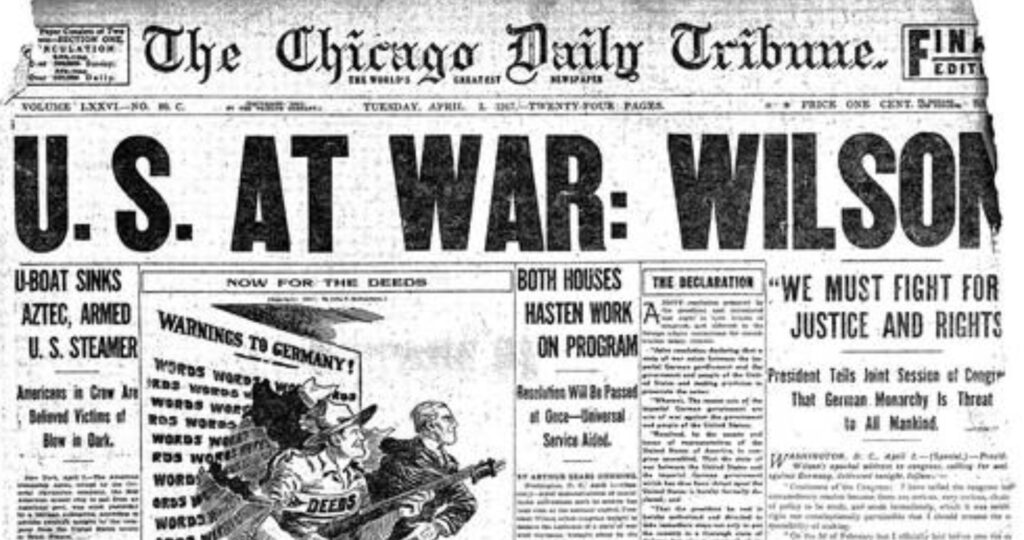
It reports on Wilson’s speech to Congress on April 2, 1917, in which he asked for a declaration of war on Germany. Author: Unknown author. License: Public domain.”
America in 1914 — Why Staying Out Made Sense
When the war began in August 1914, American neutrality was not cowardice or indifference. It was a considered position with deep historical roots and broad popular support.
The United States had been founded partly on the rejection of European entanglements. George Washington’s farewell address had warned explicitly against “permanent alliances” with European powers. For over a century, American foreign policy had been shaped by the Monroe Doctrine — the principle that the Western Hemisphere was America’s sphere of influence and Europe’s wars were Europe’s business.
Beyond tradition, there were practical reasons for neutrality. America in 1914 was a nation of immigrants — many of them recent arrivals from Germany, Austria-Hungary, Ireland, and other countries with complicated relationships to the warring powers. A large proportion of the population had family ties to one side or the other. Declaring war on Germany would have meant declaring war on the ancestral homeland of millions of American citizens.
And then there was profit. A neutral America could trade with both sides — selling food, raw materials, and manufactured goods to whoever would buy them. American industry boomed from the first months of the war. Business had every incentive to stay neutral.
Wilson himself was personally opposed to the war. He was a progressive idealist who believed in law, reason, and diplomacy. He found the spectacle of European powers destroying each other for imperial and nationalist reasons genuinely horrifying. He wanted America to be what he called “a nation apart” — a model of a better way of doing things, not another participant in the old game of power politics.
So why did it all change?
The First Crack — The Lusitania, May 1915
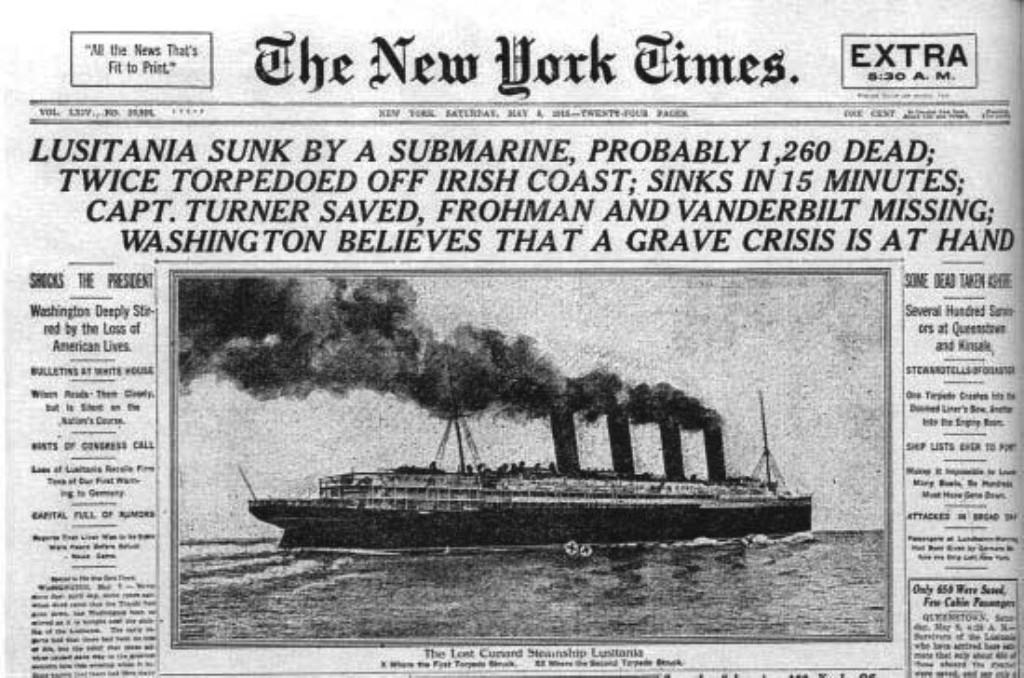
The first serious rupture in American neutrality came not in 1917 but on May 7, 1915, when a German submarine — a U-boat — torpedoed and sank the British ocean liner RMS Lusitania off the coast of Ireland.
The Lusitania sank in 18 minutes. Of the 1,198 people who died, 128 were American citizens.
The American public reaction was one of genuine outrage. The sinking of a civilian passenger liner — with women, children, and neutral American passengers aboard — felt like a fundamental violation of the rules of warfare. Germany had crossed a line.
Wilson sent a series of increasingly firm diplomatic protests to Berlin. He demanded that Germany stop attacking passenger ships and guarantee the safety of neutral vessels. Germany, recognizing that unrestricted submarine warfare risked bringing America into the war, temporarily restricted its U-boat operations.
But Wilson did not ask Congress for a declaration of war in 1915. The Lusitania outrage was real — but it was not yet enough to overcome the fundamental reluctance of the American public to enter the conflict. Wilson continued to pursue diplomatic solutions, continued to call for a “peace without victory” that would end the war without either side winning decisively.
The Lusitania planted a seed of public anger. It would take two more years — and several more crises — for that seed to bear its bitter fruit.
The Money Problem — America’s Financial Stake in Allied Victory
One of the least discussed but most important reasons why the US entered World War 1 is money.
In August 1914, Wilson had declared that America should be neutral “in thought as well as in action.” Within weeks, this proved impossible — at least in financial terms. The Allied powers desperately needed supplies, weapons, food, and equipment. They needed to buy them from somewhere, and the most obvious supplier was the United States.
American banks — led by the powerful House of Morgan, which acted as the Allies’ primary financial agent in America — began extending loans to Britain and France. American factories began filling Allied orders. American farms began feeding Allied armies.
By 1917, Britain and France owed American banks and businesses approximately $2.3 billion — an enormous sum. Germany and Austria-Hungary owed American creditors almost nothing, partly because the British naval blockade made transatlantic trade with the Central Powers nearly impossible.
The financial relationship created a structural bias in American policy that neutrality in name could not fully conceal. If Germany won the war, Britain and France might default on their debts. American banks and businesses that had staked billions on Allied victory would face catastrophic losses. The American economy, which had been booming on Allied orders, would face a severe contraction.
This is not to say that Wilson or American politicians consciously decided to enter the war to protect Wall Street’s investments. The reality was more subtle — the financial entanglement gradually shifted the balance of American interests, making Allied victory increasingly important to American economic wellbeing, and making German actions that threatened Allied survival increasingly threatening to America itself.
When historians ask why did the US enter World War 1, the money trail is part of the answer that textbooks often skip. It should not be skipped.
Unrestricted Submarine Warfare — Germany’s Fatal Miscalculation
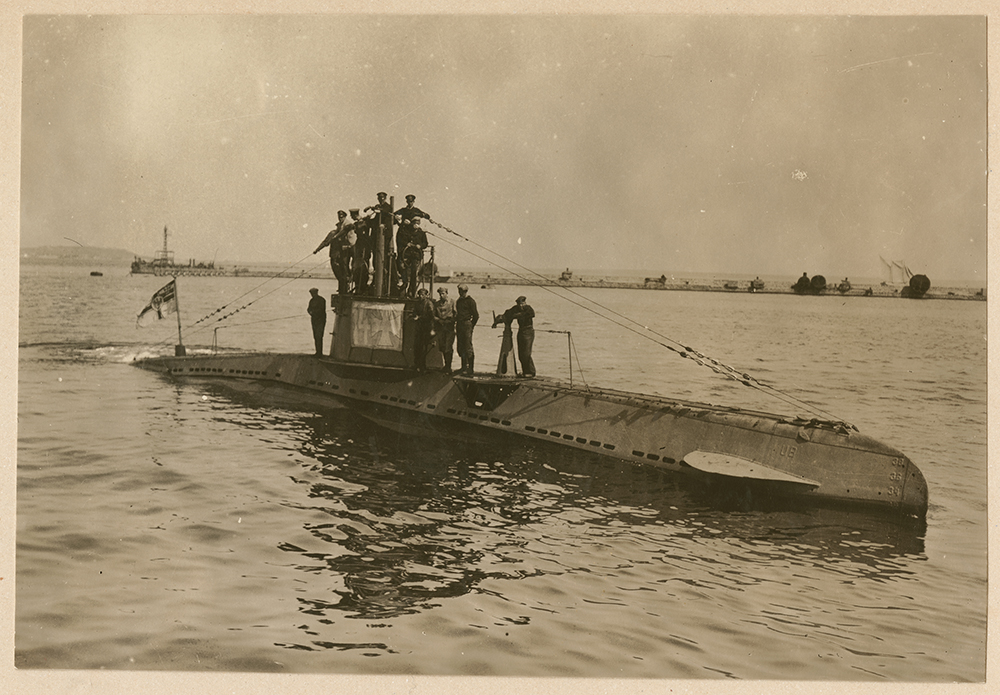
The immediate trigger for American entry into the war was Germany’s decision to resume unrestricted submarine warfare on February 1, 1917.
To understand why this decision was so consequential, you need to understand the strategic situation Germany faced in early 1917. The war on land had reached a complete stalemate. The British naval blockade was slowly strangling the German economy — food shortages were severe, civilian suffering was real, and German military planners could see that time was not on their side. Something had to change.
German naval commanders proposed a solution — resume full unrestricted submarine warfare, sinking any ship heading for Britain regardless of flag or cargo. The calculations were cold and precise. Britain imported a huge proportion of its food and raw materials by sea. If German U-boats could sink enough ships fast enough, Britain would be starved into submission within months — before American intervention could make any difference, even if it came.
German military planners knew perfectly well that unrestricted submarine warfare would almost certainly bring America into the war. They calculated that this did not matter — America would take too long to mobilize, train, and deploy significant forces to Europe. By the time American soldiers arrived in meaningful numbers, Britain would already have been defeated.
This calculation was wrong on every count.
On February 3, Wilson severed diplomatic relations with Germany. He still hoped to avoid war — still believed, even at this late stage, that Germany might back down under American pressure. He proposed arming American merchant ships as a middle way between war and complete surrender to German naval power.
Germany did not back down. On March 16 and 17, German submarines sank three American merchant vessels without warning. American sailors died. The question of whether America would enter the war was rapidly becoming not whether but when.
The Zimmermann Telegram — The Moment Everything Changed
On January 17, 1917, British intelligence intercepted and decoded an encrypted telegram sent by German Foreign Secretary Arthur Zimmermann to the German ambassador in Mexico.
The message was extraordinary.
Zimmermann instructed the German ambassador to approach the Mexican government with a proposal. If the United States entered the war against Germany, Germany would support Mexico in a war to reconquer Texas, New Mexico, and Arizona — territories Mexico had lost to the United States in the 19th century. Germany would provide financial support and help broker a military alliance between Mexico and Japan against the United States.
Britain sat on the telegram for several weeks, working out how to reveal it without exposing their code-breaking capabilities. On February 24, they handed the decoded text to the American ambassador in London. On March 1, it was published in American newspapers.
The public reaction was explosive.
Americans who had remained deeply reluctant to enter a European war suddenly found themselves confronting a very different proposition — Germany was not just fighting Britain and France on the other side of the Atlantic. Germany was actively plotting to sponsor a military attack on American territory, to arm America’s southern neighbour against it, and to encourage Japan — a rising Pacific power — to join the effort.
The Zimmermann Telegram transformed the political calculus entirely. It was no longer possible to argue that the war was purely a European concern that America could safely ignore. Germany had brought the war to America’s doorstep — in a telegram.
Some historians have argued that the telegram was too convenient — that it seems almost designed to push America into the war at exactly the right moment. The timing was certainly remarkable. But the telegram was genuine. Zimmermann himself confirmed its authenticity when asked by the American press — an extraordinary admission that stunned even some of his own colleagues.
The combination of unrestricted submarine warfare and the Zimmermann Telegram made American entry into the war effectively inevitable. Wilson now had both the moral justification and the political support he needed.
Wilson’s Decision — Ideology Meets Reality
On April 2, 1917, President Woodrow Wilson stood before a joint session of Congress and asked for a declaration of war against Germany.
His speech is one of the most significant in American history — and one of the most revealing about the complicated mixture of idealism and realpolitik that drove American entry into the war.
Wilson did not frame the declaration of war as a response to the Lusitania, or to the financial stakes, or even primarily to the Zimmermann Telegram. He framed it as a moral crusade. Germany’s submarine warfare, he argued, was “warfare against mankind.” America was going to war not for conquest or revenge but for the highest possible principles — “to make the world safe for democracy.”
The phrase “make the world safe for democracy” became one of the most famous in American political history. It captured Wilson’s genuine belief — and it was a genuine belief, not just rhetoric — that America’s entry into the war could transform not just the military outcome but the entire basis of international relations. Wilson saw himself not just as a war leader but as the architect of a new world order in which the old mechanisms of secret alliances, imperial competition, and balance-of-power politics would be replaced by collective security, self-determination, and international law.
This idealism shaped everything that followed — including the Fourteen Points, the League of Nations, and the Paris Peace Conference. It also generated enormous expectations that the messy realities of the actual peace settlement could not possibly meet.
The declaration of war passed the Senate 82 to 6 and the House 373 to 50. On April 6, 1917, Wilson signed it. America was at war.
What America Actually Did — The Weight That Tipped the Balance
American entry into the war did not immediately change the military situation on the Western Front. It took time — months of recruitment, training, equipping, and transporting troops across the Atlantic — before American soldiers arrived in France in significant numbers.
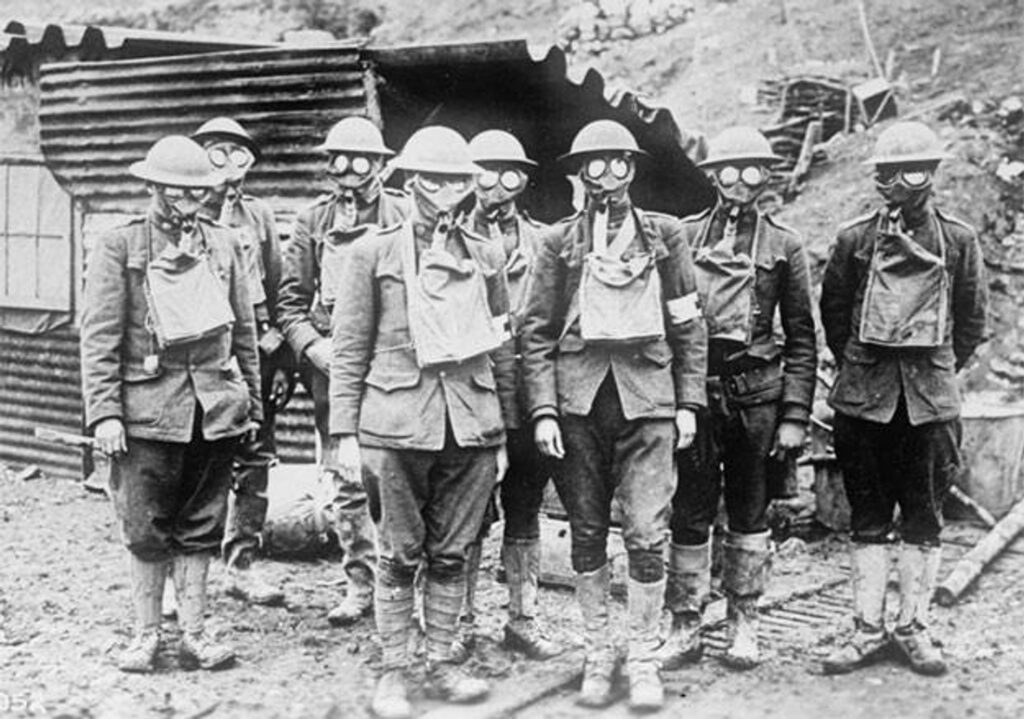
The first American troops landed in France in June 1917, but the American Expeditionary Forces, commanded by General John “Black Jack” Pershing, did not fight in large numbers until 1918. By the summer of 1918, however, American troops were arriving at the rate of 10,000 per day. By the armistice in November 1918, over two million American soldiers were in France.
The effect on the military balance was decisive — but perhaps not in the way most people imagine. American troops did fight, and fight effectively. But the more important effect of American entry was psychological and economic rather than purely military.
Germany’s Spring Offensive of March 1918 — the last great German gamble to win the war before American forces arrived in overwhelming strength — burned through Germany’s last reserves of elite troops. When it failed to achieve a decisive breakthrough, German commanders knew the war was lost. The question was no longer whether Germany could win but how long it could hold out against an enemy whose resources were, for practical purposes, unlimited.
American industrial and agricultural production — flowing to the Allies in quantities that dwarfed anything Germany could match — was at least as important as American soldiers. American loans kept Britain and France fighting when they might otherwise have been forced to seek terms. American food kept Allied civilians and soldiers fed when the German submarine campaign was doing its worst.
When Germany signed the armistice in November 1918, the decisive factor was not that American troops had won great battles — though they had fought well. It was that Germany had run out of everything, while on the other side of the line, America had ensured that the Allies never would.
The Cost — And What America Got
The United States lost approximately 116,000 soldiers in World War 1 — a significant number, but dramatically smaller than the losses of the European powers. Britain lost 886,000. France lost 1.4 million. Germany lost approximately 2 million. Russia lost perhaps 1.7 million.
By the terrible arithmetic of the war, America got off lightly.
What America gained was considerably more complex. Wilson arrived at the Paris Peace Conference as the most powerful man in the room — the leader of the only major nation that had not been bankrupted or exhausted by the war. He had the opportunity to shape the peace settlement according to his principles.
He failed. The Treaty of Versailles was not the peace Wilson had promised. His Fourteen Points were largely abandoned in the face of French demands for punishment and British imperial interests. The League of Nations was created — Wilson’s greatest ambition — and then immediately crippled when the US Senate refused to ratify the treaty and America declined to join.
Wilson returned home, launched a speaking tour to build public support for the League, suffered a severe stroke, and spent the last year of his presidency as an invalid. He died in 1924, watching the international order he had hoped to create collapse around him.
The question of why the US entered World War 1 has a clear answer — submarines, the Zimmermann Telegram, financial entanglement, and Wilson’s idealism all pushed America through the door. The harder question, which Americans argued about for the next two decades, was whether it had been worth it.
When World War 2 began in 1939, that argument was still unresolved. It took Pearl Harbor to settle it.
Do you think the United States made the right decision entering World War 1 in 1917 — or should it have stayed neutral? Leave your thoughts in the comments. And if you want to understand what American entry actually achieved, the full story of how World War 1 ended explains what happened in the final months of the war.
Leave a Reply