When Did World War 1 Start and End? (1914–1918 Explained)
The short answer is simple.
World War 1 started on July 28, 1914, when Austria-Hungary declared war on Serbia. It ended on November 11, 1918, when the Armistice came into effect at 11 o’clock in the morning.
Four years, three months, and fourteen days. Somewhere between 17 and 20 million people dead. The map of the world redrawn. Four empires destroyed. And a peace settlement so badly constructed that it made a second world war almost inevitable within a generation.
But those two dates — July 28, 1914 and November 11, 1918 — are just the beginning of the story, not the whole of it. Because the question of when World War 1 started depends on what you mean by started. And the question of when it ended depends on what you mean by ended.
The war did not begin on a single morning with a single decision. It escalated, step by step, over six weeks in the summer of 1914, through a chain of decisions that each seemed locally rational and collectively catastrophic. And it did not end cleanly on November 11. The fighting stopped. The suffering did not.
This is the full story behind the dates.
When Did World War 1 Start? — The Long Answer
The Assassination — June 28, 1914
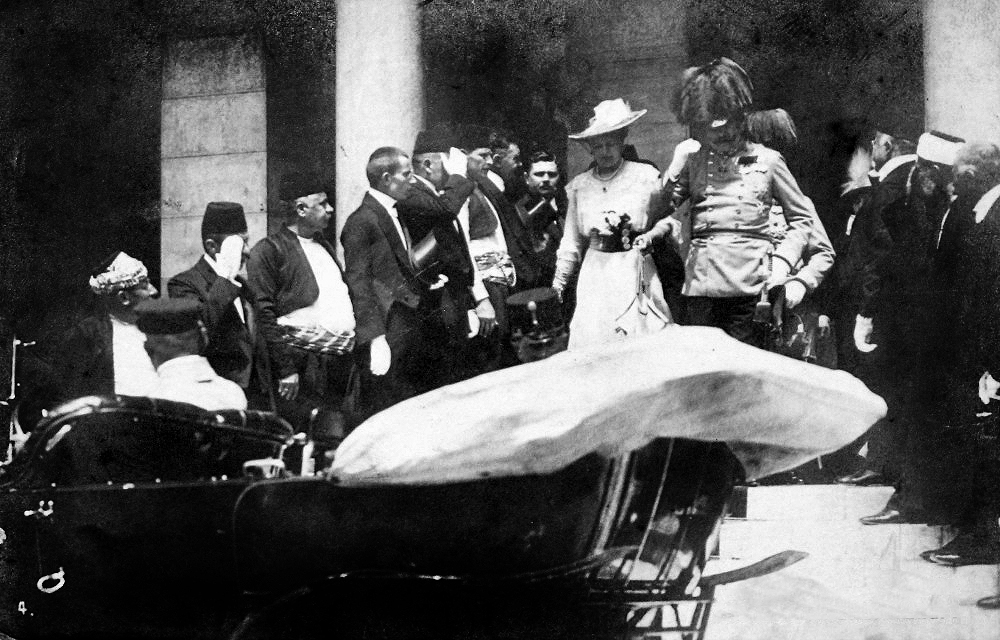
Most historians trace the starting point of World War 1 not to July 28 but to June 28 — the day Archduke Franz Ferdinand, heir to the throne of Austria-Hungary, was assassinated in Sarajevo by a nineteen-year-old Bosnian-Serb nationalist named Gavrilo Princip.
The assassination was the spark. But the gunpowder — the decades of military buildups, tangled alliances, imperial rivalries, and nationalist tensions that made a European war possible — had been accumulating for years. Without the assassination, the war might not have started in 1914. Without everything that preceded it, the assassination would not have started the war.
June 28 is the date the fuse was lit. July 28 is the date the first bomb went off.
The July Crisis — Six Weeks That Changed Everything
Between June 28 and July 28, 1914 — the period historians call the July Crisis — a sequence of decisions was made by governments across Europe that turned a regional dispute into a world war.
Austria-Hungary, furious at the assassination of its heir and determined to use the crisis to crush Serbian nationalism once and for all, spent three weeks consulting with Germany, drafting an ultimatum, and preparing for war. On July 5, Germany gave Austria-Hungary the famous blank check — unconditional support for whatever action Austria-Hungary chose to take. This decision, made in Berlin by Kaiser Wilhelm II and his chancellor, was perhaps the single most consequential of the entire crisis.
On July 23, Austria-Hungary delivered its ultimatum to Serbia — a document so deliberately harsh that it was designed to be rejected. Serbia accepted most of the demands — but not quite all. Austria-Hungary declared the response unsatisfactory.
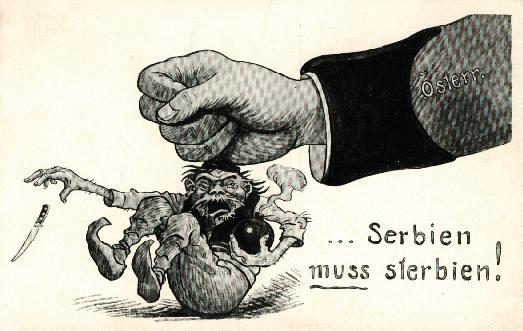
On July 28, 1914 — exactly one month after the assassination — Austria-Hungary declared war on Serbia. This is the official start date of World War 1.
But the war was still regional at this point. It became a world war through the alliance system.
The Cascade — How a Regional War Became a World War
July 28 — Austria-Hungary declares war on Serbia.
July 30 — Russia begins full military mobilization in support of Serbia. Russia saw itself as the protector of Slavic peoples and could not allow Austria-Hungary to crush Serbia without responding.
August 1 — Germany declares war on Russia. Under the terms of the alliance system, Germany was bound to support Austria-Hungary. Germany also issued an ultimatum to France — Russia’s ally — demanding to know whether France would remain neutral. France refused to answer.
August 3 — Germany declares war on France and begins invading through neutral Belgium, following the Schlieffen Plan.
August 4 — Britain declares war on Germany. Britain had guaranteed Belgian neutrality in a treaty signed in 1839. When German troops crossed the Belgian border, Britain had both a legal obligation and a strategic reason — it could not allow Germany to control the Channel ports — to enter the war.
In exactly one week, a conflict between Austria-Hungary and Serbia had become a war involving all the major European powers. The alliance system had worked exactly as its critics had always warned it might — not as a deterrent to war, but as a mechanism for turning any conflict into a catastrophe.
Does the War Start Earlier Than 1914?
Some historians argue that focusing on 1914 misses the deeper starting point of the conflict.
The arms race between Britain and Germany — particularly the naval race, in which both powers competed to build ever-larger battleships — had begun in the late 1890s. The crises over Morocco in 1905 and 1911 had nearly brought France and Germany to war. The Balkan Wars of 1912 and 1913 had already destabilized southeastern Europe and set the stage for the assassination of Franz Ferdinand.
From this perspective, 1914 was not the beginning but the culmination — the moment when pressures that had been building for a generation finally exploded. The war started in 1914. But the conditions that made it possible had been created over the previous two or three decades.
How Long Did World War 1 Last?
World War 1 lasted four years, three months, and fourteen days from the official start date of July 28, 1914 to the Armistice of November 11, 1918.
To put this in human terms — a soldier who was mobilized on the first day of the war and survived until the armistice would have spent over four years in the military. Many soldiers on the Western Front spent the majority of those four years rotating through the same system of trenches — the same mud, the same rats, the same routine of stand to at dawn and stand down at dusk, the same distant sound of artillery that never entirely stopped.
For most of that time, the front lines barely moved. The Western Front in November 1918 was not dramatically different from the Western Front in November 1914. Men had died by the millions for advances measured in kilometres — sometimes in metres.
The contrast with the Second World War is striking. World War 2 lasted six years and involved dramatic sweeping movements across entire continents. World War 1 lasted four years and was defined by the inability of either side to move at all.
When Did World War 1 End? — The Long Answer
The Armistice — November 11, 1918
The official end of the fighting came with the Armistice of November 11, 1918 — signed at 5:10 in the morning in a railway carriage in the Forest of Compiègne, France, and taking effect at 11:00 that same morning.
The Armistice was not a surrender. Germany did not surrender unconditionally — it agreed to a ceasefire on the basis of negotiated terms. This distinction would matter enormously in the years that followed. German nationalists argued — falsely, but persuasively — that the German army had not been defeated in the field but had been stabbed in the back by politicians and revolutionaries at home who had agreed to an armistice when the army could have fought on. This legend — the Dolchstoßlegende — became one of the foundational myths of Nazi propaganda.
The Armistice terms were severe. Germany was required to evacuate all occupied territories, surrender enormous quantities of military equipment, and allow Allied forces to occupy the Rhineland. The naval blockade — which had been slowly starving the German civilian population — would continue until a final peace treaty was signed.
The Last Day — November 11, 1918
The final hours before the Armistice took effect were among the most tragic of the entire war.
Both sides knew the war was ending. The Armistice had been signed at 5:10 in the morning. Every soldier on the Western Front knew that at 11:00, the guns would stop. And yet the fighting continued at its full intensity right up to the last minute — and in some places, intensified.
Allied commanders ordered attacks that they knew would end within hours. Artillery batteries fired off their remaining ammunition. Individual soldiers, knowing the war was almost over, continued to advance — some out of duty, some out of habit, some apparently because they could not quite believe it was real.
The statistics of that final morning are both staggering and deeply troubling. On November 11, 1918 — the last day of the war, when everyone knew it was ending — the Allied forces suffered approximately 11,000 casualties. More casualties than on D-Day in 1944.
American soldier Private Henry Gunther was killed at 10:59 in the morning — one minute before the ceasefire. German soldiers who saw him coming tried to wave him back. He kept advancing. He was killed at 10:59, and one minute later the guns stopped.
At 11:00, the silence fell.
When Did World War 1 Officially End? — Not 1918
Here is something that surprises many people. The Armistice of November 11, 1918 ended the fighting. It did not officially end the war.
The war was formally ended by the Treaty of Versailles, signed on June 28, 1919 — exactly five years after the assassination of Franz Ferdinand. Until the treaty was signed, the two sides were technically still at war, even though the guns had been silent for seven months.
During those seven months, the Allied naval blockade of Germany continued. German civilians continued to suffer from food shortages that the blockade had created. Estimates of the number of German civilians who died from malnutrition and related disease during and after the war — prolonged by the continuation of the blockade — range from 400,000 to 700,000.
The peace conference that produced the Treaty of Versailles opened in January 1919. The treaty was presented to the German delegation in May. After protests that it violated the principles on which the armistice had been agreed — particularly Woodrow Wilson’s Fourteen Points — Germany signed on June 28.
For Germany, the war that had started with the blank check of July 5, 1914 officially ended in the Hall of Mirrors at Versailles on June 28, 1919. Almost exactly five years.
Did World War 1 Ever Really End?
This is the question that haunts the history of the 20th century.
The Armistice stopped the shooting. The Treaty of Versailles ended the legal state of war. But did the conflict itself actually end — or did it simply pause?
Twenty-one years after the Armistice, on September 1, 1939, Germany invaded Poland. The Second World War began. Many historians have argued that the two world wars were not separate conflicts but a single extended European civil war with a twenty-year truce in the middle — that what is called World War 1 and World War 2 should properly be understood as the First and Second phases of a single catastrophe.
The French general Ferdinand Foch — who had commanded the Allied armies in 1918 and who had predicted exactly this when he saw the terms of the Versailles treaty — said it most clearly. Standing outside the railway carriage where the armistice had been signed, having just watched the German delegates leave, Foch turned to an aide and said: “This is not a peace. It is an armistice for twenty years.”
He was right to within seven months.
How Long Did World War 1 Last?
World War 1 lasted just over four years — from July 28, 1914, to November 11, 1918. In total, the war lasted four years, three months, and fourteen days.
However, while the fighting stopped in 1918, the war was not officially over until the Treaty of Versailles was signed in June 1919.
The Key Dates — A Complete Timeline
Here is every significant date in the arc of World War 1, from the spark to the final peace.
June 28, 1914 — Archduke Franz Ferdinand assassinated in Sarajevo.
July 5, 1914 — Germany gives Austria-Hungary the blank check — unconditional support.
July 23, 1914 — Austria-Hungary delivers its ultimatum to Serbia.
July 28, 1914 — Austria-Hungary declares war on Serbia. Official start of World War 1.
August 1, 1914 — Germany declares war on Russia.
August 3, 1914 — Germany declares war on France. German forces begin invading Belgium.
August 4, 1914 — Britain declares war on Germany. The war is now a world war.
August 26–30, 1914 — Battle of Tannenberg. Germany defeats Russia on the Eastern Front.
September 5–12, 1914 — Battle of the Marne. German advance into France is stopped.
October–November 1914 — The Race to the Sea. Both sides try to outflank each other. Trench lines are established from the Channel to Switzerland.
December 24–25, 1914 — The Christmas Truce. Soldiers on both sides meet in No Man’s Land.
April 22, 1915 — Second Battle of Ypres. Germany uses poison gas for the first time on the Western Front.
May 7, 1915 — RMS Lusitania sunk by a German U-boat. 1,198 people die including 128 Americans.
February 21 – December 18, 1916 — Battle of Verdun. Nearly 700,000 casualties over ten months.
July 1 – November 18, 1916 — Battle of the Somme. 57,470 British casualties on the first day alone.
September 15, 1916 — Tanks used in combat for the first time at Flers-Courcelette.
January 17, 1917 — The Zimmermann Telegram intercepted by British intelligence.
February 1, 1917 — Germany resumes unrestricted submarine warfare.
March 8–16, 1917 — Russian Revolution begins. Tsar Nicholas II abdicates.
April 6, 1917 — The United States declares war on Germany.
June 7, 1917 — Battle of Messines. British detonate 19 mines under German lines.
July 31 – November 10, 1917 — Battle of Passchendaele. Some of the worst conditions of the war.
November 20, 1917 — Battle of Cambrai. First mass tank attack in history.
March 3, 1918 — Treaty of Brest-Litovsk. Russia exits the war.
March 21, 1918 — Germany launches the Spring Offensive — its last great gamble.
August 8, 1918 — Battle of Amiens. The Hundred Days Offensive begins. Ludendorff calls it “the black day of the German Army.”
September 29, 1918 — Bulgaria signs an armistice.
October 30, 1918 — Ottoman Empire signs an armistice.
November 3, 1918 — Austria-Hungary signs an armistice.
November 9, 1918 — Kaiser Wilhelm II abdicates. German Republic proclaimed.
November 11, 1918 — Armistice signed at 5:10 AM. Fighting stops at 11:00 AM. Official end of WWI fighting.
June 28, 1919 — Treaty of Versailles signed. Official legal end of World War 1.
Why These Dates Still Matter
Every year on November 11, at exactly 11 o’clock in the morning, the United Kingdom observes two minutes of silence. In France, church bells ring. In Australia and New Zealand, April 25 — Anzac Day, marking the Gallipoli landings of 1915 — is the primary day of remembrance.
These are not just commemorations of a historical event. They are acknowledgements that the dates of World War 1 — 1914 to 1918 — mark one of the most significant ruptures in human history. Before those dates, the world was organized around empires, alliances, and the assumption that war between great powers was a manageable instrument of policy. After those dates, everything — the map of the world, the nature of warfare, the relationship between governments and their citizens, the meaning of sacrifice — had changed permanently.
World War 1 started on July 28, 1914. It ended — officially — on November 11, 1918, and then legally on June 28, 1919.
But in another sense, it never quite ended. The world it created is still the world we live in. The borders it drew are still being contested. The institutions it produced — the United Nations, the modern state system, the laws of war — are still the framework within which international relations operate.
The guns stopped on the eleventh hour of the eleventh day of the eleventh month of 1918.
The echoes have never entirely gone quiet.
Which date in the World War 1 timeline do you find most significant — the assassination of Franz Ferdinand, the first day of the Somme, or the moment the guns stopped on November 11? Leave your thoughts in the comments. And if you want to understand the full story of how the war ended, the complete account of the Armistice goes much deeper into those final hours.
Leave a Reply